Episode Transcript
[00:00:08] Speaker A: Hello and welcome to the Fremantle Press podcast. Today we're recording in Wol yoolup on Whadjuk Noongar Boodjar. And I'd like to acknowledge our first storytellers along with Noongar elders past and present. My name is Holden shepherd, former winner of the Hungerford Award for my book Invisible Boys.
I'm here with publisher Kate Sutherland to introduce you to one of four writers shortlisted for the 2026 Hungerford Award.
Winning the Hungerford Award for me was a huge honour and a boost to my career and it's so exciting to see other authors on this shortlist.
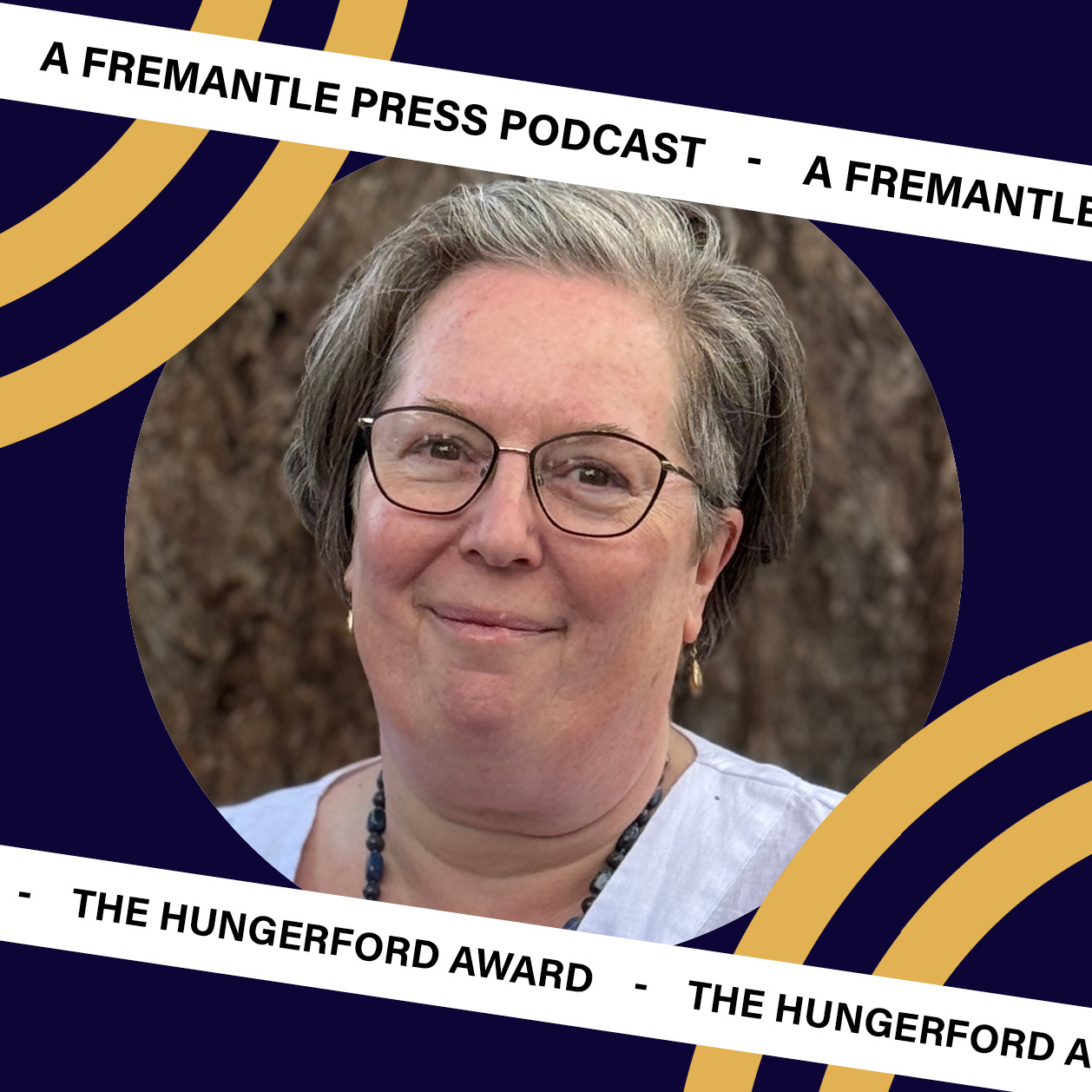
Today's guest is Jessica Kennedy, whose manuscript is a work of narrative nonfiction called the Ridicule and Resurrection of Maria Gimbitas.
First up, Kate, could you describe why you and the judges chose this manuscript for the shortlist?
[00:00:55] Speaker B: This was Holden, truly one of the most surprising of all the entries in the Hungerford Award this year.
Reading it was like sitting around someone's kitchen table with a nice big pot of tea and a warm and witty friend and being told an entertaining story. And the story Jessica tells about discovering who Maria Gimbutas was and what she did is more than compelling. Like, it's a story that you want to share with as many people as you can.
I feel like I was really late to this particular party, but it's a story I will definitely be sharing with everyone I speak to.
[00:01:27] Speaker A: Thank you so much, Kate.
Now to introduce our guest for today, Jessica Kennedy brings little to no writerly credentials to this party. And I should say that's her words, not mine. Born in London and now resident in Perth, she's also lived in the us, Japan and Singapore.
In a younger time, her degree in philosophy, politics and economics was deprecated by her peers as the byword for the laziest degree available from Oxford University.
But vengeance is sweet, because outside those hallowed halls, who can fail to be impressed by such a la de da accomplishment?
For work, she taught English, then spent years climbing a corporate ladder, then jacked that all in to become an acupuncturist and will soon also be a death doula. Jessica's pleasures include reading, dancing cats, dogs and the fierce natural beauty of the great Western woodland.
Lately, she has been seized by an irresistible compulsion to write about the extraordinary work of Maria Gimbitas.
Jessica, welcome to the podcast.
[00:02:27] Speaker C: Thank you.
[00:02:28] Speaker A: Congratulations on getting this far. An award like this is a really important milestone. What was it like to discover you were on the Hungerford Award shortlist? And how are you feeling about was
[00:02:40] Speaker C: huge, huge, huge, huge.
After the call came, I was so excited the whole day long that I fully forgot that it was bin day. The bins never went out and my red bin is now in crisis.
But more seriously, before the call, I had been kind of having a conversation with myself about whether I should set a deadline to stop trying to get my work out there.
So reaching the shortlist has been this really deep confirmation that I'm not imagining it, but I am writing about something. Interest.
[00:03:16] Speaker A: You should definitely take this shortlisting as encouragement and validation. And I think the red bin can just be collateral damage. Okay, now could you tell us in your own words what your manuscript is about?
[00:03:27] Speaker C: Yes. Okay. So my book has a lot going on. The way that I would describe it is by telling you that really many years ago now, I read a dusty old book that turned my worldview on its head. It introduced me to Maria Gimbutas, a lady who was once a world famous archaeologist. Her work basically described that ancient Europe was this enduring utopia of equality and peace.
But archaeologists debunked, discredited all of it. And then I looked back more recently and realized there were some big changes going on. So my book brings you my search for answers.
I discovered that rather than being refuted more often, Maria was actually just ridiculed.
And there's this huge sort of plot twist going on where DNA studies are bringing this massive vindication to her and her work.
And for me, almost the coolest thing about this is that her work enclosed the message that human violence and inequality are not inevitable.
And her work comes with this enormously kind of hopefully, vision of how we could be living.
[00:04:41] Speaker A: That's such a nice thought. When we're living in kind of post hope times, it sometimes feels like. So would you be happy to maybe share with us an excerpt about this story? And who was Maria?
[00:04:53] Speaker C: Yes. Okay.
Even immersed in the fight for Maria Gimbitas legacy, it has been a pleasure to learn what a richly complex person she was.
I suspect that if you talk to 20 different people who met her, they would describe 20 different Marias. My Maria is not only not the same person as your Maria, she could be an entirely different person altogether.
Some of the glimpses I have seen of her have been real surprises to me or challenging to digest.
In my original mind's eye. She was small and slight, dry and academic, but with a twinkle of humor all the while. That was my imaginary Maria.
The real Maria Gimbitas was both a hard taskmaster and deeply loved.
She was generous, kind and magnanimous.
And stubborn, rigid and certain.
She was a workaholic and she hosted great parties.
She was a storming intellect and very hospitable. She was scholarly and technical, a nonconformist, confrontational and witchy.
She was a pioneer and genuinely a disruptor. She was extremely tough, a survivor and she was charismatic and inspiring.
She was a loyal friend and she was moved by the love of her disciples.
She did not suffer fools gladly and she could be very warm and kind even to her critics. She was extremely serious minded and she loved to dance and have fun. Within her lifetime she achieved enormous success and enviable fame and also witnessed her professional reputation start to die a death.
She was an indefatigable researcher and a demanding teacher.
Part of her life's work has received a magnificent vindication from new DNA evidence, part remains heavily contested.
The scale and originality of her contribution to her field is both celebrated and and marginalized.
She remains renowned in her homeland and respected amongst Eastern European archaeologists, but became a pariah within the Western archaeological establishment.
She was stoic in the face of the treatment she received, steely in her focus on the minutiae of archaeological progress and deeply emotionally connected to the belief system she uncovered.
Towards the end, she seemed to embrace a mysticism that did not sit well even with some of her supporters in the academy.
Her work could hardly have been more focused on the value of women and through the intense force of her will she broke new ground for female archaeologists.
But she was a disappointment to some younger feminist academics. She provided inspiration and a surge of empowered self belief amongst a large body of young women and did not live to see their movement drained of its vitality. She was a heroine to other feminists one or two generations below her, although all she did to encourage that was to doggedly follow where her research was leading her. As her profession turned hard towards the tangible, towards micro statements of material fact, she turned to grand questions of symbolism, beliefs and the spiritual lives of our ancestors.
As her colleagues turned to measurements and computers, her mind and scholarship roamed across disciplines from mythology to linguistics.
Academic correctness ran through her work like a steel spine.
And she defied all the conventions of her era.
She did not shy away from conclusions that she knew would be deeply unpopular.
[00:08:42] Speaker A: Thank you so much, Jessica, for sharing that fascinating reading. One of the most interesting things about writing about real people is how easily their legacy can be one dimensionalised. And I feel like even just in that excerpt you've multidimensionalised Maria so well. I really love that metaphorical image of that steel spine as well to represent her. So thank you so much for sharing that. When did you first hear about her and what compelled you to write about her?
[00:09:09] Speaker C: I was sort of like struck in the head by this topic. I wrote about Maria a long time ago. Even though she had been discredited, her ideas really rocked my worldview.
And I had a conversation about her with someone else a couple of years ago and it made me just like pop online and have a look at what the state of play was.
And I was super shocked by what I read and I set off down a rabbit hole and here we are.
[00:09:38] Speaker A: I think the best books come from those kind of research rabbit holes, don't they? How did you feel in the end after everything you learned about Maria's life and work?
[00:09:46] Speaker C: Oh, furious for one.
How she was treated, how flippantly her work was dismissed just because they didn't like her conclusions.
Also, you can see from that excerpt I just read, I ended up feeling really amazed by Maria as a person and how complex she was, as we all probably are, like on the inside. But in her case. So evidently what I feel the most is a renewed faith in humanity and what we're capable of. And I feel more optimism for our future than I did, which is great right now.
The other thing obviously is like, I've got this sort of urge to spread her story as as far and wide as I can.
[00:10:31] Speaker A: Yeah, more optimism in our era. Sounds like an absolutely wonderful thing.
Is there anything else you'd like to share with our listeners today?
[00:10:39] Speaker C: Yes, I just wanna acknowledge that I feel like I'm in super impressive company.
The other three books on this shortlist all sound amazing. They sound like things that I would love to read. Yeah, I'm excited to get the opportunity to read those things. I also really enjoyed Invisible Boys, your book that won this award back in 2019. And I feel very honored, moved, touched, privileged, all these things to be in this company. It's very, very validating and very exciting.
[00:11:11] Speaker A: So nice to hear. And Fremantle Press is just an amazing publisher to work with, so you're in amazing hands being on this shortlist.
Jessica and Kate, thank you both for being here and sharing some of the ridicule and resurrection of Maria Gimbitas listeners. You can meet Jessica at the 2026 Hungerford announcement at Wallulup Civic Centre, City of Fremantle Town hall on Friday 16th October. Tickets are free and available from the Fremantle Press website. I'm Holden Shepherd. Thank you for listening.