Episode Transcript
[00:00:11] Speaker A: Hello and welcome to the Fremantle Press podcast. Today we're recording on Wolilap in Whadjuk, Noongar Bujar and I'd like to acknowledge our first storytellers along with Noongar elders past and present.
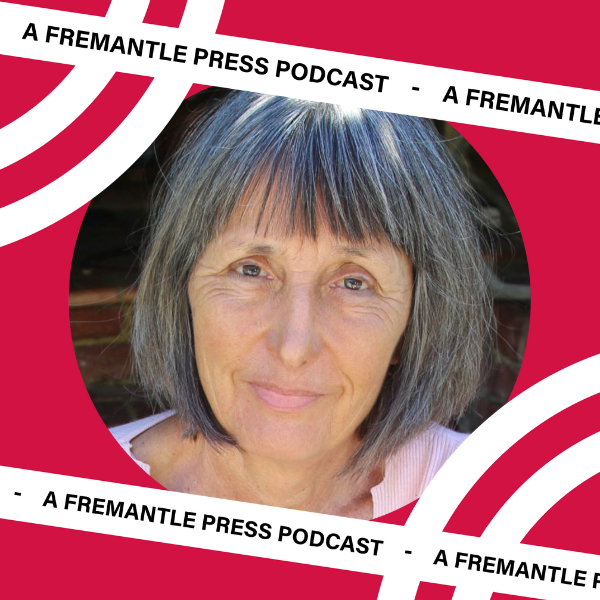
My name is Georgia Richter, Fremantle Press publisher and today I will be joined by author Brigid Lowry.
Brigid was born in New Zealand to a bohemian family where she learned to value books and writing.
She hopes her work will inspire people to think, laugh and enjoy being alive.
Brigid has a master's degree in creative writing and is the award winning author of eight young adult titles including the bestseller Guitar Highway Rose.
Her recent titles are Still Life with Teapot on Zen Writing and Creativity and A Year of Loving Kindness to Myself and Other Essays, both with Fremantle Press. Brigid is in favour of Kindness, Vegetables and living simply.
Brigid's new release is A Time of Living Graciously Reflections on Growing Older.
Would you like to tell us a bit about your book and also what was the impetus for writing it?
[00:01:16] Speaker B: Oh, hi. Yeah, thanks for having me.
So I think we write books for ourselves in a way. So my Year of Loving Kindness book was because I was exploring that for myself. And again, this book which is about eldering and getting older and how we feel about that and the big D death, it's sort of for me at 72, it's something I'm looking at spiritually, psychologically, physically and every other way.
And it just seemed a good topic and it seemed like my unique combination of Buddhism, self help, Huber and Brigittiness could be applied to this.
Yeah. For people who, it's either them, they're facing it or they want to give it to their mother for Christmas or dad or their, you know, I think it's a good topic to have and that's why I wrote it.
[00:02:03] Speaker A: So is it your experience that people are actually reluctant to talk about ageing and dying? And do you think that conversations like this are important?
[00:02:13] Speaker B: Yeah, I think some people are. Some people are very interested and willing and it's on their psychic table now, like, okay, this is what's happening. It's like when you get pregnant or get married or have children or it's sort of a life stage.
So yeah, there are some people who, who find it very interesting and other people who are in complete denial. I'm in a discussion group and there's one woman there, lovely, beautiful person, she just says, don't talk about it, don't talk about ageing.
You know, like, how can I look younger? And so We've all got a different take on it.
[00:02:46] Speaker A: I've noticed that with the elders in my life, that those who are articulate are observing that this is a new and different phase. And it seems like your book actually might provide a way in or a bit of a. A guide to how to start thinking about these things.
[00:03:04] Speaker B: Yeah, I think so. And I think it's sort of humbling to face. Oh, yeah, okay. Things I used to be able to do. I can't do my hearing. Not as good as it used to be. And it can seem like a personal failure. But when you get in the zone of going, this is what happens. We're born, we flourish, we're the most incredibly good looking 14 year old, we're whatever, we're 45, we get a bit of gray hair and then there's this bit.
And because it's unavoidable, could it be gracious, could it be, dare I say it, wonderful and interesting.
[00:03:38] Speaker A: So, Brigid, I'd love it if you were able to read us a passage from your book.
[00:03:41] Speaker B: Willingly. I shall do it.
My friend Richard and I find humour in weird things like car crash stories. I told him about backing into a pole while visiting the Buddhist nunnery. My mindfulness nowhere to be seen, despite the holy vibe of the establishment. He matched it by telling me how he once damaged a hire car in Ireland twice, once on either side of the vehicle. Such things are not funny at the time, but, oh, they make a good story afterwards.
In the same vein, at Christmas, I always give my poet friend a book. This year I gave her a selection of writings from a Korean Zen master. It had beautiful illustrations and because it was not new, had a few loose pages at the front.
I explained this to my friend because we are eco warrior women who do not subscribe to capitalism and we pass along treasures. She writes on my Christmas card, then goes to find a book to gift to me. As she hands me her choice, I say gently, I gave that one to you last year. General mirth. Further amusement the next day when she phones to tell me that the book I gifted her fell to pieces.
It's still readable, though, she tells me such events are best regarded as comic. In Steppenwolf, Hermann Hess advised that we learn what is to be taken seriously and laugh at the rest.
Benign amusement at our own foibles is an art worth cultivating because being dor is no fun at all.
Instead, try gentle and kind and vaguely amused.
Laughter is good medicine.
Anne Lamott calls it carbonated holiness.
Buddhist monk Ajahn Brahm is internationally popular because of his unique talent to combine ancient wisdom with a keen ability to laugh at the foibles of the world and himself.
I can't say it often enough, both to myself and to you, dear reader, that we oversee our own mind state, and that contentment, merriment, acceptance, encouragement, and good cheer are valuable commodities.
When I take life less seriously, I am happier.
It doesn't take a genius to understand this intellectually, but it takes practice to know when to lighten up, when to try for silly instead of serious, when to see something as comic instead of tragic.
[00:06:08] Speaker A: You might have seen me chuckling silently as I was listening to that reading. I really love how you bring your writer's observational ability and that minutiae, that absolute observation from your own life into what you're relaying to the reader. And then you're also drawing on wise elders from elsewhere. And I think that combination works really well.
Of course, some things are less easy to be light about and to laugh at, and your book also contains some of that. Why do you think it's important to mix the light with the dark?
[00:06:44] Speaker B: Well, first, thank you for laughing at my jokes. That is why we can be friends.
And yeah, it is a serious topic and a big topic, so I think humor and lightness are important.
And mixing the light with the dark, this is called life. We are born into what Jack Kornfield calls the world of 10,000. Or he may not have invented this, actually, but 10,000 joys and 10,000 sorrows, and this is it. We have beautiful things happening, grandchildren, turtles, sunsets, Christmas fizzy drinks. And we have terrible things happening, wars all around the planet, fear about climate change, a friend who's very ill. And so this is the human predicament, and here we are stuck in it. I think I mentioned in the book Anne Lamott's son, Sam. He was 7, and he said, I think I've got life figured out, mainly good, some bad bits. And I think for me to write about, to put the sugar coating on it would not be good. And also you can be very glum about aging if you look at only you know that your friends are gonna die and your body's not doing what it should. So I think it has to be a mixture of the beauty and the tragedy and the fun and the getting real about things.
[00:07:58] Speaker A: And thank you for that very specific response to think about turtles, because I immediately feel better when I do. And I think I'll carry that forward from this podcast. Brigid One of the other things that I noticed that you brought into the book was that you went out and you interviewed a number of people in your life with the same sorts of questions. I'm not sure if you gave them all the questions or said, answer just what you want. But why did you include other people's voices in this book?
[00:08:25] Speaker B: Funny you should ask me that. My editor, who happens to be you, said when I was proposing the book, you'll need some other voices. And of course, my editor is always right. The three people who specifically answered questions, they're all very different and they all have a very different thing. Like my friend Steve, who was not actually called Steve, but wanted to be called Steve in the book.
He thought about it really deeply what sort of a send off he wanted, and that was interesting. And included in the book are those questions. So in terms of conversations either with oneself, one could go through and go, oh, here's some good questions. What sort of a funeral do I want? Are there any goodbyes or forgives that I need to do? And one of my friends was completely like, not into bucket lists. But it would behove one to think, maybe, okay, if I've got a week to live or a year to live, what do I want to do with it? Because really we don't know. We don't know if today is the day or after, you know, after a year or we'll still be here, you know, old and dotty at 103. So it's quite good to just examine some of those things. So, yeah, I thought that was good to have other voices.
[00:09:37] Speaker A: When you wrote this book, did it lead you through the same process? Did you come to think about ageing and dying differently as a result of your engagement with the topic?
[00:09:46] Speaker B: I think so, yeah. I think it's part of a. Sorry, corny word, but a spiritual journey for me. Like, what is this? Oh, here I am. I was just reading something about Zen teachers and they run palliative care, so that's a big thing, hospicey thing. And then he got cancer and he just said, my turn, my turn. It's a great phrase. You go, aha, I'm getting old, my turn. How is this?
So, yeah, I'm on the path of what does this mean to me? And I'm just really trying, as we said before, to lighten up a bit. Sorry, a Facebook thing. But where the person said, how about just doing whatever you want? It's freaking awesome. Well, you can't do that when you're like 42 and you've got a boss standing over your desk and a cranky wife. But you can do it when you're 72. I've realized you no one would know if I was inside all day watching crap and eating chocolate, this would be my prerogative. I don't, by the way, but I could.
[00:10:41] Speaker A: So let's go down to WA Ink right now and get some tattoos of turtles, shall we?
[00:10:46] Speaker B: That's the one.
[00:10:48] Speaker A: So if you were gifted this wonderful book, would you hope that it would start conversations? Or do you think also just the reading of it might be something to give someone to think about themselves?
[00:11:02] Speaker B: I mean, we know this, but once you put something out into the universe, you have absolutely no control. And of course, what the writer wants to hear is, it's good. I liked it, so that's a start. But in terms of conversations, well, I gave it to my wonderful son, said he very much liked it, but he didn't immediately open up a conversation. Although we have had conversations about, you know, what to do when I die. And he's the one who famously, when I've said, and you know what? I'm writing it all down, we have to have a Van Morrison song. He goes, you'll be dead, Mum. I get to pick the songs so we can talk about death and dying.
I've found that people who are a bit younger than me are very willing to talk about parents with dementia because they need to. It's like a huge thing.
And it's good to have people you can talk about things with. So, yeah, I do hope the book hits a good note with people. Cause, because I. Yeah, I think there's some worthwhile things in it.
[00:11:58] Speaker A: Well, thank you for encapsulating all your wonderful Bridgety thoughts in such a gorgeous little package. And I know that people will get a lot out of it. So thank you for speaking to me today, Bridget.
[00:12:11] Speaker B: Thank you. And thanks Fremantle Press for publishing good books, including mine, which are available from.
[00:12:18] Speaker A: All good bookstores and online.
I'm Georgia Richter, and I look forward to joining you next time on the FREMANTLE Press podcast.